Mastering the Dagger Brush
Painting long grasses, distant tree canopies, and ripples in water becomes far more manageable with the Dagger Brush. Named for its distinctive sword-like shape, this brush combines a fine, controlled tip with a gently curved edge, allowing for a wide range of marks from a single tool. Its ability to move effortlessly between precision and flow makes it one of the most versatile brushes in the studio, particularly when working with movement, texture, and subtle detail.

Series 9 Ivory Dagger Brush is available to purchase here
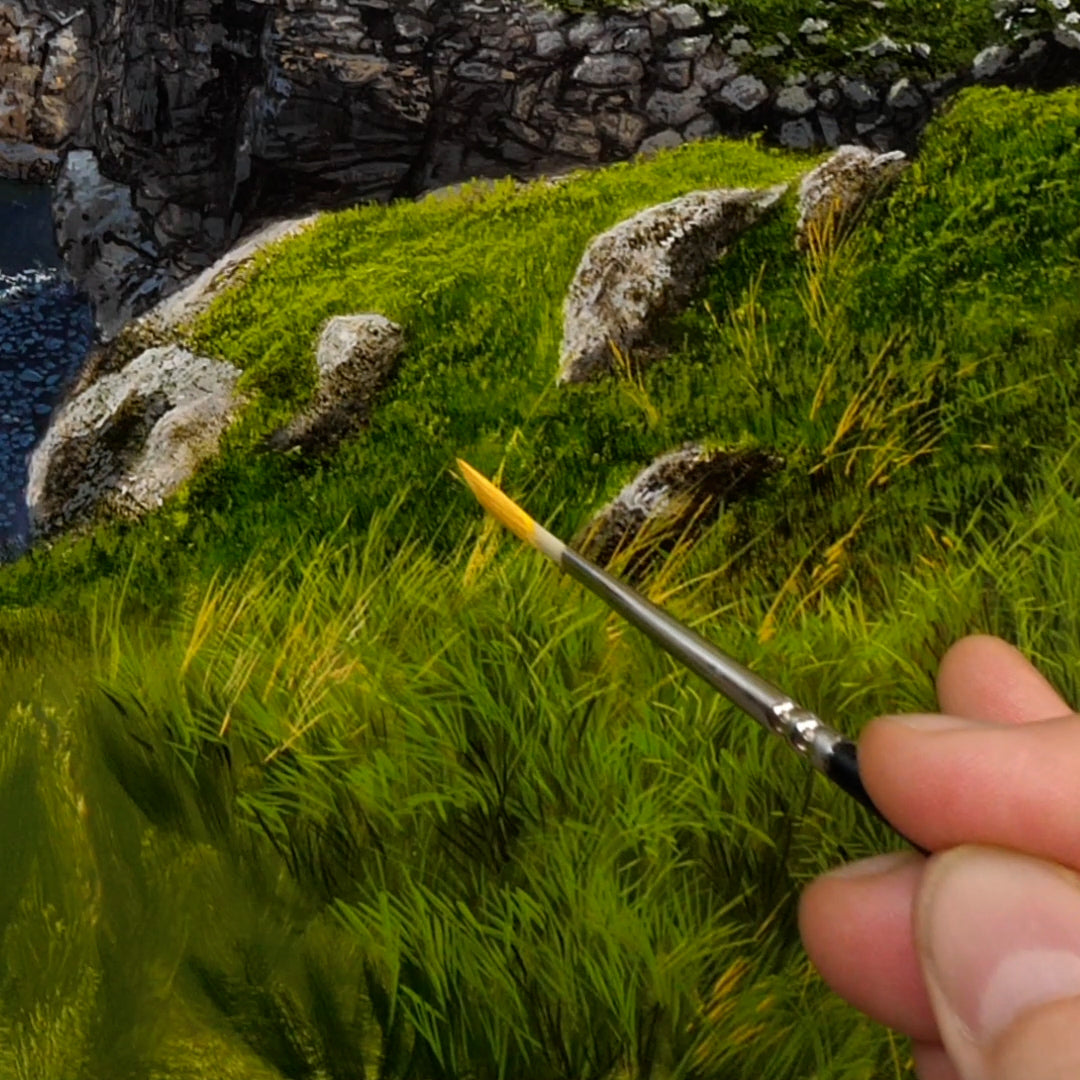
It pairs beautifully with Rigger Brushes, especially when painting grass. With long, confident strokes, you can achieve perfectly tapered blades of grass, as seen in my St Ives painting. In my tutorial, you’ll see how the Dagger is ideal for adding slightly thicker blades of grass, bringing realism and variety to the foreground.

Watch my St Ives tutorial here
Why the Dagger Brush Stands Out
-
Sharp, clean edges – great for defining shapes and textures.
-
Thin, controlled lines – the brush holds paint effectively, allowing strokes to stand proud with an impasto effect.
-
Versatility – from delicate grass to textured ripples, the Dagger adapts easily.
The secret to success with the Dagger is in the paint mix: be sure to load the brush with plenty of paint from your palette so it carries enough onto the canvas.
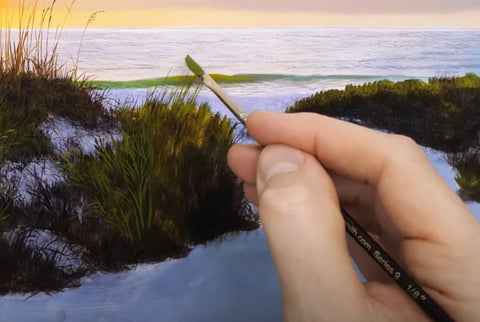
The Dagger Brush isn’t only useful for painting grasses. Its shape and flexibility make it an excellent tool for adding delicate detail, subtle texture, and even impasto effects across a wide range of subjects. The long, tapered edge allows you to move easily between fine lines and broader marks simply by adjusting the angle of the brush or the pressure you apply. This makes it particularly effective for areas that need variation without constant brush changes.
When used with thicker paint, the dagger can also be loaded to create impasto effects. The curved edge naturally breaks the paint as it’s pulled across the canvas, helping to suggest texture in subjects such as foliage, tree bark, rocks, or an animals coat. eg a Sheep's Wavy Fleece. Used lightly, the same brush is capable of placing clean, controlled marks that add clarity and depth. This versatility is what makes the Dagger Brush such a valuable part of a brush collection.

💡 Pro Tip:
For tree trunks and branches, hold the Dagger Brush flatter to the surface and work with a slightly thicker mix of paint. This allows the full length of the edge to make contact with the surface, giving you stronger coverage and clean, confident strokes with a natural taper. Varying the pressure as you pull the brush down will help you suggest changes in thickness and direction, which is especially useful for trunks that widen at the base or branches that gradually thin as they extend.
When working on water highlights, such as ripples or light catching the surface, adding a small amount of Liquin to your paint can make a big difference. It helps the paint flow more smoothly, keeps the stroke open for longer, and allows you to place softer, more controlled marks without dragging. This is particularly useful when laying broken highlights across water, as it gives you more time to adjust the stroke and keeps the effect light and natural rather than heavy or overworked.


Using the Dagger when painting distant trees.
The very tip of the Dagger Brush is excellent for painting distant tree canopies. There’s no need to thin the paint—using it straight from the tube works perfectly. This technique creates natural, textured foliage. You can see exactly how I use it in my YouTube video above, where I build tree shapes on the side of a mountain.
Happy Painting!